
Loading...
Serving Rochester, MN and surrounding areas. (507) 738-1202
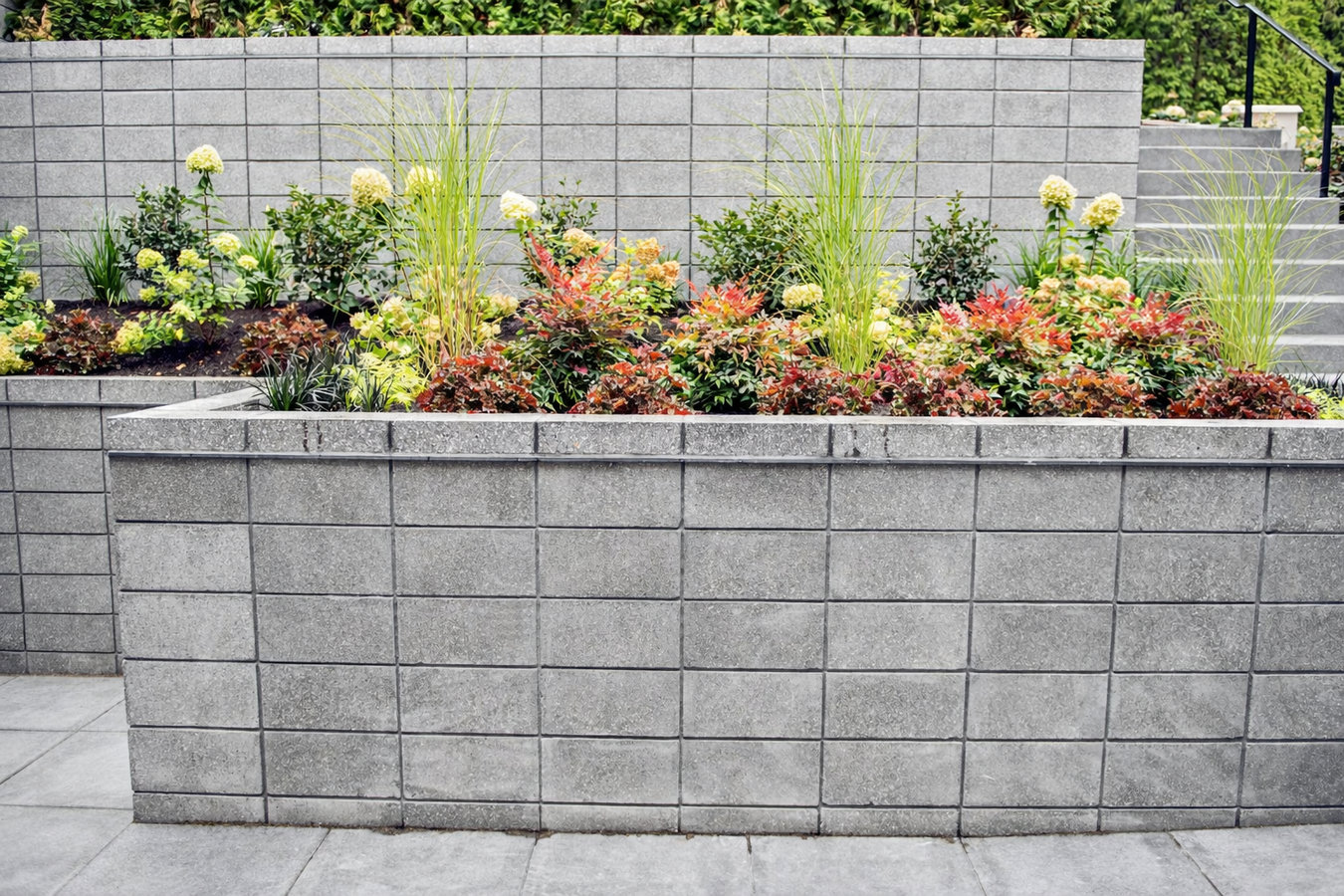
A block wall that leans after one winter was built wrong from the start. We dig to the frost line, drain it right, and give you a wall that holds for decades.
Concrete block walls in Rochester are built by stacking CMU blocks on a reinforced footing that sits below the frost line, with mortar bonding each course, drainage behind any retaining section, and most residential retaining or landscape walls completed in one to five days depending on length and height.
The footing depth is what separates a Rochester block wall from one built in a warmer state. Rochester's ground can freeze well past two feet in a hard winter, and a footing that does not go deep enough will heave and crack the wall above it - sometimes after just one or two seasons. The blocks and mortar get all the attention, but it is the part underground that decides whether the wall lasts. If you are also managing slope and drainage issues, retaining wall construction combines the footing work with dedicated drainage engineering for more complex sites.
Rochester's clay-heavy soils add another layer of complexity. Clay holds water rather than draining it, and that water builds real pressure behind a retaining wall before it freezes. Gravel backfill and a perforated drain pipe at the wall base are not optional extras in this region - they are what keeps the wall standing.
A wall that has started to tilt forward or bulge outward has either shifted footing or water pressure building up behind it. In Rochester's freeze-thaw climate, a wall that leans even slightly in spring can be significantly worse by the following year. Early intervention is far cheaper than rebuilding a failed wall.
Crumbling mortar between blocks is one of the earliest visible warning signs. Once joints open up, water gets in, freezes, and accelerates the damage every winter. Catching it early with tuck-pointing saves significantly compared to waiting until blocks start to shift out of position.
Standing water near your home's foundation or at the base of a slope after rain or snowmelt is a signal that drainage is not working. A block retaining wall with proper drainage behind it can redirect that water and protect your foundation - a common fix in Rochester neighborhoods with any grade change.
A steep backyard slope is hard to mow and impossible to furnish. A concrete block retaining wall creates one or more flat terraces, turning wasted hillside into usable outdoor space. Many Rochester homeowners add a patio or garden bed on the terraced section once the wall is in.
We build concrete block walls for retaining, landscaping, privacy, and structural purposes throughout Rochester and the surrounding region. Every project starts with a footing poured below the frost line - that is non-negotiable in southeastern Minnesota. For retaining walls, we install gravel backfill and a perforated drain pipe as the wall goes up, not as an afterthought. Walls that need additional strength get rebar set into the block cores and grout poured in - the internal steel is what allows the wall to resist soil pressure and stay plumb for decades. We also handle foundation block wall installation for homes that need structural support rather than landscape definition.
For homeowners dealing with an existing wall that has shifted or has failing mortar, we assess whether tuck-pointing can save the wall or whether a full rebuild is the honest answer. We also combine block wall work with related projects - retaining wall construction that ties into drainage improvements or a full backyard grading project is a common request in Rochester's hillier neighborhoods.
Suits homeowners with a sloped yard or drainage problem who need a wall that holds soil back and redirects water away from the foundation.
Suits homeowners who want a low-maintenance, permanent border for garden beds, planting areas, or tiered landscaping that holds its shape through Minnesota winters.
Suits homeowners who want a durable, permanent boundary or privacy screen that will not warp, rot, or blow down in a Minnesota windstorm.
Suits homeowners with an existing wall that has crumbling joints or minor shifting and want an honest assessment of whether repair is a viable option.
Rochester sits in a river valley, and parts of the city - particularly areas near the Zumbro River and its tributaries - sit low enough that drainage is a recurring concern for homeowners. When a block retaining wall is involved, poor drainage does not just cause inconvenience. Clay soil that holds water and then freezes against a wall face in January can exert significant lateral pressure - the kind that causes walls to bow or overturn in a single winter. That is why gravel backfill and a drain pipe behind every retaining wall are standard practice on every Rochester job we do, not an upsell.
Rochester also requires permits for many retaining walls, and the height threshold that triggers a permit is lower than most homeowners expect. We handle the permit application and coordinate the city inspection so you have documentation that the wall was built to code - that record matters when you sell. Homeowners in Kasson and Stewartville face the same frost-depth and clay-soil conditions, and we apply the same standards throughout the service area.
We visit your property to measure the planned wall length and height, assess the slope and drainage, and look at soil conditions. You get a written estimate that covers footing depth, drainage approach, and block type - no surprises mid-project. We reply within one business day of your inquiry.
For walls that require a city permit, we handle the application paperwork. This step typically adds a week or two to the timeline, but you get a project on record with the city - which protects you and simplifies any future sale of the home.
We dig a trench to the required frost-line depth, set forms, and pour a reinforced concrete footing. In Rochester, this footing goes deeper than you might expect - that depth is what the wall stands on for decades. The footing cures for several days before block-laying begins.
We set blocks course by course, install rebar and grout in the cores for reinforced walls, and place gravel backfill and drain pipe behind retaining sections as the wall rises. After backfill and cleanup, we walk you through the finished work and confirm the city inspection is scheduled if one is required.
Written quote, no pressure. We cover permit questions and drainage planning in the estimate visit. Reply within one business day.
(507) 738-1202We dig every block wall footing to the depth required by Rochester's local building code and climate - not to the minimum that looks acceptable. A footing that sits above the frost line in southeastern Minnesota is not a footing; it is a countdown to a repair call. This is the standard we hold on every project, every time.
Every retaining wall we build includes gravel backfill and a perforated drain pipe at the base - installed as the wall goes up, not added later. Rochester's clay soils hold water rather than draining it, and that water pressure is what destroys retaining walls from the inside out. We do not skip this step.
We manage the permit application and city inspection process so you do not have to navigate Rochester's building department on your own. A permitted, inspected wall gives you a record of code-compliant construction - the City of Rochester requires this for walls above the height threshold, and we know what that threshold is.
We are a member of the Mason Contractors Association of America, which means we follow national masonry standards and stay current with training and best practices. That membership is a concrete indicator that this is how we operate every day - not just when someone is watching.
Frost-depth footings, proper drainage, permit handling, and industry-standard practices are not separate features - they are the same project done correctly the first time. Together they mean you are not calling us back in spring because the wall moved.
Structural block wall installation for home foundations, designed to Rochester's frost-depth and load requirements.
Learn MoreFull retaining wall projects combining engineered drainage, frost-line footings, and soil management for Rochester's sloped and clay-heavy lots.
Learn MoreThe spring building season fills up fast - call now to schedule your on-site estimate before the calendar closes.