
Loading...
Serving Rochester, MN and surrounding areas. (507) 738-1202
Rochester Concrete & Masonry is your local masonry contractor in Rochester, MN, specializing in foundation repair, tuckpointing, and brick repair. Serving Rochester since 2016 with crews who know Olmsted County clay soils and freeze-thaw conditions firsthand.
Rochester homes sit on clay-heavy glacial till that shifts with every freeze-thaw cycle, making foundation cracks a common and recurring problem here. If you are seeing horizontal cracks in basement walls or doors that started sticking after last winter, learn more about foundation repair in Rochester before the problem grows.
Rochester winters push water into every small gap in mortar joints, and that water expands when it freezes. Homes in the older neighborhoods around downtown and near the medical campus often have mortar that has been deteriorating for years and needs proper repointing to stay watertight.
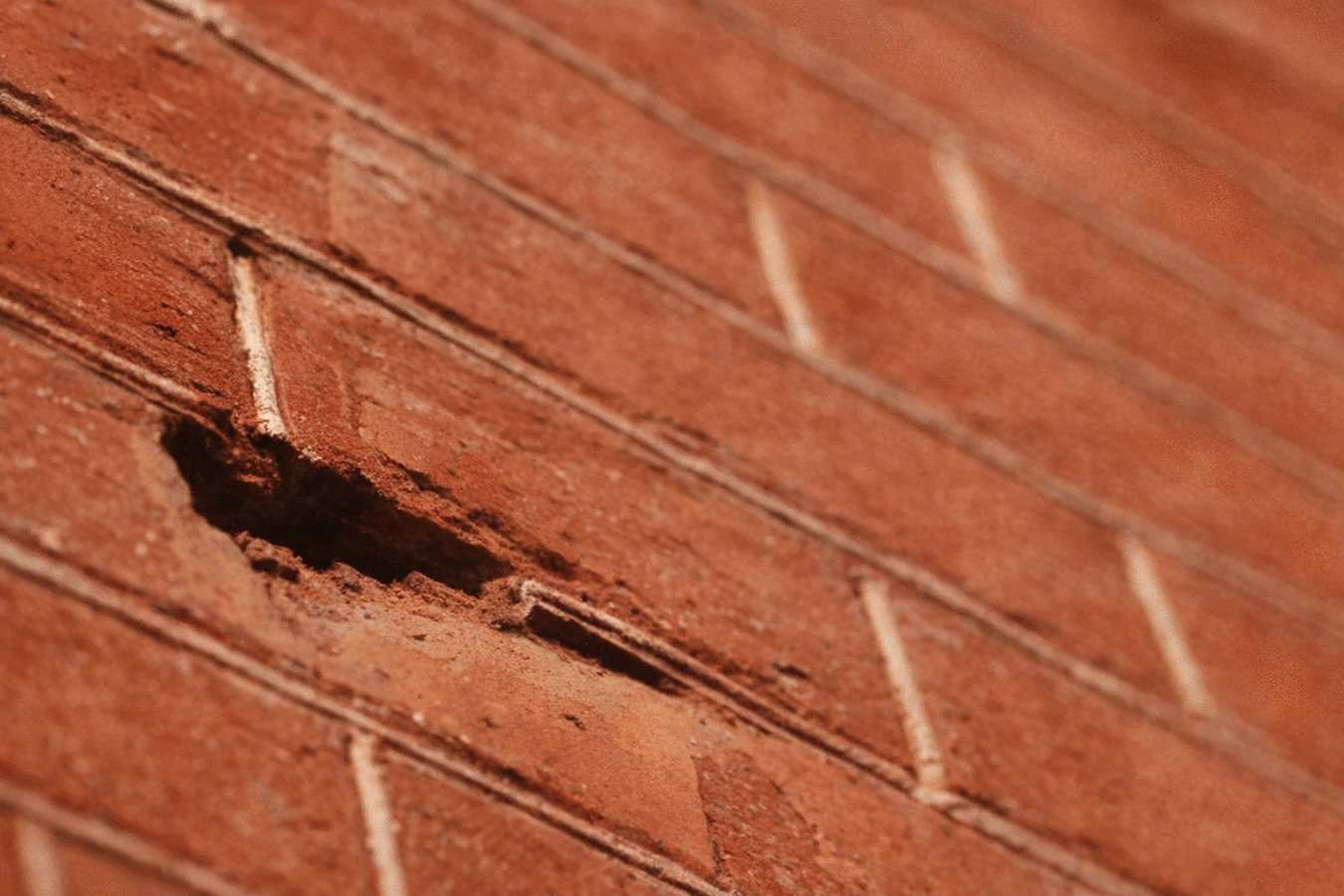
Spalling, cracked, and displaced bricks are common in Rochester homes built in the 1950s through 1980s, where the freeze-thaw cycle has had decades to work on original masonry. Replacing damaged units before the problem spreads keeps the wall structurally sound and looking right.
Rochester properties on sloped terrain near the Zumbro River valley, or in subdivisions graded for drainage, often need retaining walls that can handle clay soil lateral pressure and hard winters. A wall set without proper frost-depth footings will shift by its second or third season.
Rochester chimneys face some of the harshest freeze-thaw exposure of any masonry on the house, sitting fully exposed to wind, ice, and snowmelt from fall through spring. Cracks in the crown, spalling flue bricks, and deteriorated flashing are all common on homes throughout the city.
Concrete and asphalt driveways across Rochester show the effects of hard winters, with cracking and heaving common on properties throughout the city. Paver installations done with proper base depth hold up through freeze-thaw cycles far better than standard poured concrete with no joint relief.
Rochester sits in a river valley in southeastern Minnesota, where winters are long and the ground freezes deep - often several feet down - before thawing in spring. That freeze-thaw cycle is the single biggest driver of masonry damage in this city. Water gets into mortar joints, foundation cracks, and paver bases, then expands as it freezes, widening the gap every season. Rochester homeowners who ignore small cracks in fall routinely face much larger repairs by the following spring.
The soils beneath most of Rochester are clay-heavy glacial till - material that expands when saturated and shrinks when dry. This constant movement puts lateral pressure on foundation walls, shifts retaining walls off-level, and heaves concrete slabs. Any masonry contractor working in Rochester needs to account for this soil behavior when choosing repair methods and setting depth for any structure that goes into the ground. A contractor who does not understand Olmsted County soils will use methods that work elsewhere but fail here within a few seasons.
Our crew has worked throughout Rochester since 2016, pulling permits regularly through the City of Rochester Building Safety Division and working on properties ranging from older homes near the downtown core to newer subdivisions spreading out along U.S. Highway 52. We know which neighborhoods have aging foundation block that needs careful assessment, and which outer-ring properties are hitting their first major maintenance cycle after 15 to 20 winters.
Rochester is the third-largest city in Minnesota and covers a lot of ground. The areas near the South Fork of the Zumbro River deal with drainage and slope challenges that do not exist in the flatter suburban neighborhoods to the north and west. Homeowners near the Mayo Clinic campus often have older brick and block structures that need restoration work, while properties further out along Highway 14 or U.S. 52 tend to need driveway and retaining wall work. We also serve nearby communities - if you are in Byron, MN just west of Rochester, we cover that area regularly as well.
Reach us by phone or through the contact form and describe what you are seeing. We respond within one business day and will schedule an on-site assessment at a time that works for you.
We walk the property, assess the condition of the masonry, and identify any contributing factors like drainage or soil issues. You get a written estimate with a clear scope before any work begins - no surprise add-ons.
For structural masonry work, we pull the required permit with the City of Rochester. This adds a few days to the timeline but ensures the work meets local code and gives you documentation for any future buyer.
The crew completes the job and walks you through the finished work. You receive warranty documentation before we leave, and we answer any questions about maintenance or what to watch for going forward.
We serve all of Rochester - from the older neighborhoods near downtown to the newer subdivisions on the city's edge. Call or submit the form and we will get back to you within one business day.
(507) 738-1202Rochester is the third-largest city in Minnesota, home to more than 120,000 people and anchored by the Mayo Clinic, one of the most recognized medical centers in the world. The city sits in the South Fork of the Zumbro River valley in Olmsted County and has grown steadily for decades, drawing medical professionals, researchers, and technology workers. IBM has maintained a major presence here for decades, adding a technology workforce alongside the medical community. The result is a city with a wide range of housing - older homes near the original downtown and the hospital campus, mid-century ranch and split-level houses in established neighborhoods, and newer subdivisions spreading outward in every direction.
The housing stock in Rochester spans nearly every decade of the 20th century, with a meaningful concentration of homes built in the 1960s through 1980s that are now reaching the age where masonry, driveways, and structural elements need serious attention. Properties near the Zumbro River and its tributaries sit in low terrain where drainage and soil saturation are ongoing concerns. The outer-ring neighborhoods that expanded from the 1990s onward are hitting their first major maintenance cycles. For nearby communities, we also serve Stewartville, MN about 8 miles to the south, where a similar mix of older and newer housing stock faces the same southeastern Minnesota freeze-thaw conditions.
Upgrade any surface with beautiful, low-maintenance stone veneer.
Learn MoreLay a reliable foundation block wall built to code and to last.
Learn MoreCreate a custom outdoor kitchen built from durable masonry materials.
Learn MoreSpring is the busiest season for masonry repairs in Rochester - get on the schedule before the wait list fills up.