
Loading...
Serving Rochester, MN and surrounding areas. (507) 738-1202
Rochester Concrete & Masonry is a masonry contractor serving Austin, MN, with foundation repair, brick repair, tuckpointing, and retaining wall construction for Mower County homeowners. We have served this region since 2016 and know the Cedar River drainage context, the mid-century housing stock built during Hormel's growth years, and the freeze-thaw conditions that drive masonry repair calls every spring in Austin.
We return Austin-area calls within one business day and schedule on-site assessments so you have a full picture of what the work involves before making any decision.
Austin homes from the mid-20th century - built when Hormel was drawing workers to town and the city was growing fast - commonly sit on full block foundations that have now gone through 50 to 70 or more freeze-thaw cycles. Properties near the Cedar River and East Side Lake deal with low-lying drainage that keeps soil saturated long after spring snowmelt, adding lateral pressure to walls that were already aging. Our foundation repair service addresses both the structural cracks and the water management conditions that cause them to open in the first place.
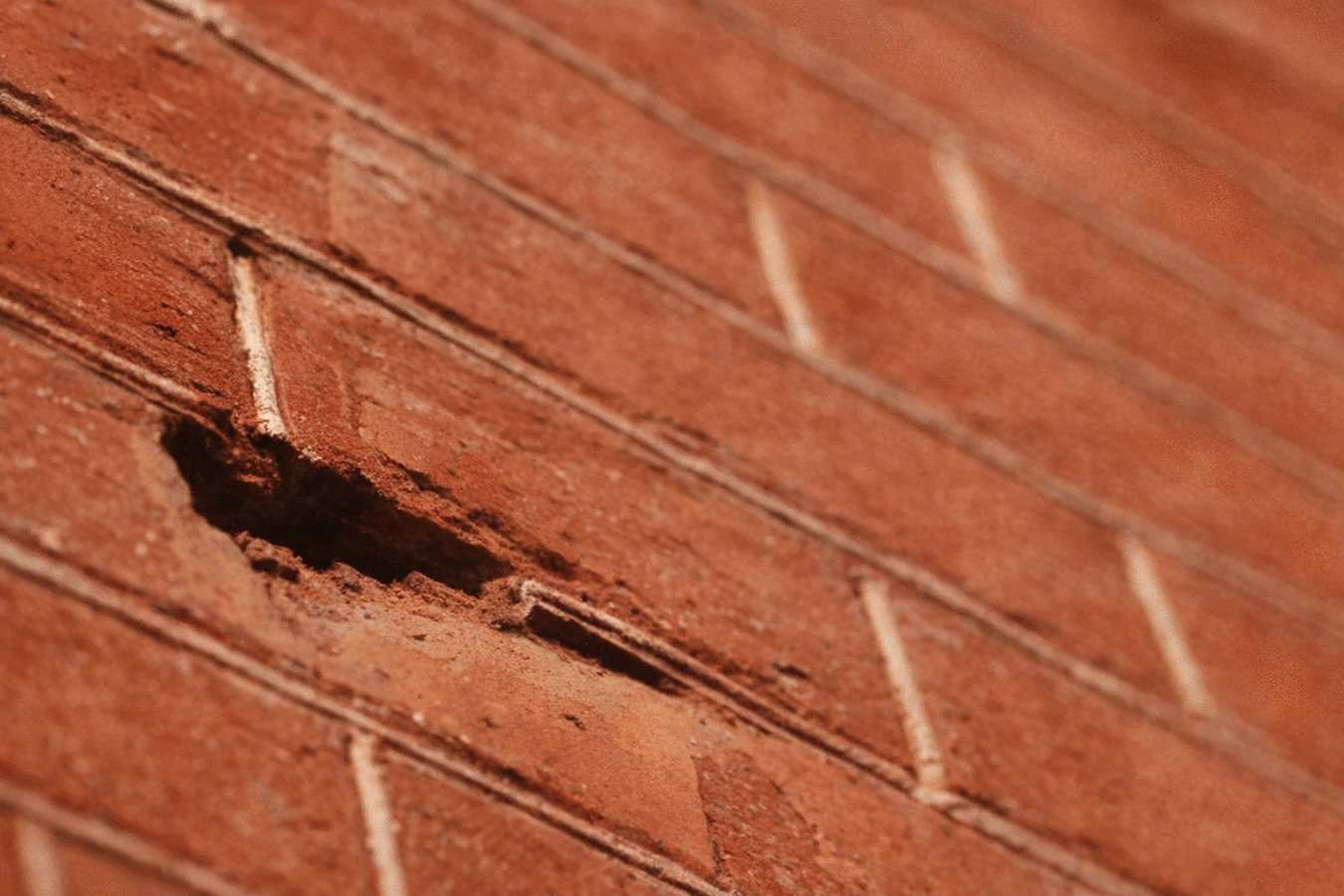
Brick chimneys, veneer walls, and brick features on Austin homes from the 1940s through 1970s are at the age where spalling faces and cracked units become routine. Austin winters freeze brick deeply and hold that cold for months, which is hard on any units that have absorbed moisture before the temperatures drop. We replace damaged brick, repoint the surrounding joints, and match mortar color so the repair integrates with the existing wall rather than standing out.
Mortar joints on Austin homes from the Hormel-era construction period have reached the point where replacement is a maintenance task, not a special repair. When joints erode past the brick face, water pools and freezes in the gap each winter, widening it with every cycle. Tuckpointing done before the gap becomes significant is far less expensive than waiting until water has reached the substrate and begun compromising the brick behind.
Sloped lots across Austin, particularly near the Cedar River corridor and on graded residential streets, need retaining walls that can handle clay soil conditions specific to Mower County. Clay absorbs spring snowmelt and holds it, building hydrostatic pressure behind walls that lack adequate drainage. We design and build retaining walls with proper drainage layers and footings sized for these ground conditions, not for drier climates.
Concrete driveways in Austin crack and heave from freeze-thaw movement, and homes near the Cedar River and East Side Lake on lower-elevation lots see extra moisture in the soil that makes this worse each season. Paver installations built on a well-compacted aggregate base handle seasonal ground movement better than concrete because individual units can flex slightly without cracking, and any section that settles can be lifted and reset without replacing the whole surface.
Masonry chimneys on Austin homes built in the 1940s and 1950s are at the age where crowns crack, mortar joints at the top courses open up, and flashing fails around the base. Austin's severe winter temperatures push these failures faster than in milder climates because any moisture trapped in the masonry before freeze season expands aggressively. We repair crowns, repoint top courses, and inspect flashing to stop water entry before it travels into the flue and firebox below.
Austin grew rapidly in the mid-20th century, driven by Hormel Foods and the manufacturing and food processing economy the company anchored. That growth period produced the majority of the city's current housing stock - homes from the 1940s through 1970s that are now old enough to show the effects of decades of Minnesota winters. Block foundations from that era were built to standards of the time, and 60 years of freeze-thaw cycling, soil movement, and moisture has taken its toll. Chimneys, brick veneer, and mortar joints from the same period are at or past the point where maintenance is due.
The Cedar River runs through Austin, and East Side Lake and Mill Pond sit within residential areas of the city. Low-lying properties near these water features deal with soil that stays saturated well into spring - in some years several weeks after nearby higher ground has dried out. Clay-heavy soils throughout Mower County absorb and hold that moisture, which affects every masonry element close to the ground. Foundation walls, retaining walls, walkways, and driveway installations all need to be designed with this drainage reality in mind to hold up through the seasons here. A contractor who does not know the ground conditions in this part of southeastern Minnesota will not build or repair masonry to last.
Our crew works throughout Austin regularly, and we understand the local conditions that affect masonry contractor work here. Austin sits at Interstate 90 and U.S. Highway 218, which makes it straightforward to reach from Rochester, about 40 miles to the northwest, and from Albert Lea to the west on I-90. Permit inquiries for structural masonry work in Austin are handled through the City of Austin building and inspections department, and we pull those permits as part of our standard process so homeowners do not have to navigate it on their own. We are familiar with both the older established neighborhoods near Oakland Avenue and Main Street, and the areas closer to East Side Lake where drainage conditions require extra care in planning.
The Jay C. Hormel Nature Center on Austin's north side and the Cedar River corridor running through the city are landmarks we use to navigate the different parts of town, and we know which neighborhoods sit on lower ground and which have better natural drainage. We also serve Albert Lea, MN, about 25 miles west on I-90, so our crews travel that entire corridor regularly. Homeowners in either city can count on us to arrive knowing the area, not learning it on their job.
Call us or fill out the online form with a brief description of what you are seeing - a cracked foundation wall, damaged brick on a chimney, a shifting retaining wall, or a driveway that has heaved or cracked. We respond within one business day and set up an on-site visit.
We visit the property, assess the masonry in person, and give you a written estimate with full scope and cost before any work starts. For foundation concerns, we look at both the crack itself and the surrounding conditions so we are not just treating a symptom. No obligation, no pressure.
We schedule a start date that works with your calendar and bring the crew and materials to complete the job in the timeframe we committed to. You do not need to be home for exterior work, though we are glad to walk you through progress at any stage.
Once the work is complete, we walk the site with you to review what was done and answer any questions. If something comes up after we have left Austin, call us - we stand behind the work we do here and will come back if needed.
We serve Austin, MN and the surrounding Mower County area. Fill out the form below or call us and we will get back to you within one business day.
(507) 738-1202Austin is the county seat of Mower County in southeastern Minnesota, with a population of around 26,000 people, making it one of the larger cities in that part of the state. The city is defined in large part by Hormel Foods Corporation, which has had its corporate headquarters here since the company was founded in 1891 and still operates one of its largest processing plants in Austin. According to Wikipedia, Austin sits at the intersection of Interstate 90 and U.S. Highway 218, placing it on the main east-west corridor across southern Minnesota and about 40 miles from Rochester to the northwest. The Cedar River runs through the city, and East Side Lake and Mill Pond provide recreational areas within residential neighborhoods.
Residential neighborhoods in Austin reflect the city's mid-century growth, with most homes built during the decades when Hormel's workforce was expanding. Streets near downtown, Oakland Avenue, and the neighborhoods around East Side Lake carry the bulk of the older housing stock - full-basement homes on modest lots with mature trees and the kind of brick and block construction that now regularly needs masonry attention. The City of Austin also operates a rental licensing program, which reflects a meaningful share of rental properties alongside owner-occupied homes throughout the older neighborhoods. Nearby, Albert Lea, MN sits about 25 miles west and shares the same I-90 corridor, similar housing age, and comparable masonry repair needs driven by the same southeastern Minnesota climate.
Upgrade any surface with beautiful, low-maintenance stone veneer.
Learn MoreLay a reliable foundation block wall built to code and to last.
Learn MoreCreate a custom outdoor kitchen built from durable masonry materials.
Learn MoreCall us today or send an estimate request and we will respond within one business day. We serve Austin, MN and all of Mower County.